
Quilt appraising – Part 2 – So you want to be a quilt appraiser
October 2026
Covering Quilts
Quilt appraising – Part 2 – So you want to be a quilt appraiser
by Sandra Starley
Whether you want to become a certified quilt appraiser or are simply curious about appraisals or appraisers, I think you will find the training process interesting. While doing appraisals I am often asked, “how do I become an appraiser”? My short answer: contact the American Quilters Society for certification information and join the American Quilt Study Group. To be an AQS Certified Appraiser, you must have a full and well-rounded knowledge of quilt history, as well as contemporary quilting, including traditional, modern, and art quilting. You must be able to date, evaluate, and value a quilt from any period and virtually any style or construction technique. Hmmm, starting to see why the process is a bit daunting and only a few obtain certification? There are only about 60 Certified Appraisers in the United States and Canada (if it were easy, everyone would be doing it).
The American Quilters Society (AQS) in Paducah, Kentucky, is the only national organization specializing in the certification of quilt appraiser, and they have a training, testing, and certification program. To start appraising, you must attend the AQS Three-Day Appraisal Skills Course for the basics of appraising. The classes are “designed to give prospective quilt appraisers an idea of what they know, what they don’t know, and what they need to know in order to pass AQS testing before becoming a Quilt Appraiser Certified by the American Quilter’s Society.” For more information on the certification program, including their comprehensive reading list, visit www.americanquilter.com/connect/aqs-certified-appraisal-program.
With perseverance, practice, and a lot of study, certification is an attainable goal and a rewarding and exciting journey. I did it while living in the desert, starting with no knowledge of antique quilts and only a few years of quilting experience, so you can do it, too. After taking the Appraisal Course, I began appraising quilts (old and new) for friends and the public. AQS only certifies seasoned appraisers and notes, “appraisal skills are acquired through experience and working in the field.” I joined the American Quilt Study Group and fell in love with learning history through quilts. Because there were no antique quilts to practice on in my area, I began to collect them, learning history and valuations in the process. I intensely read the books on the AQS list (yes, another new collection).
I also continued to keep up with contemporary quilting techniques, patterns, fabrics, and designers, in traditional, modern, and art quilting. I observed the prices for fabrics, books, patterns, and completed quilts and learned how to value the time and materials involved and well as the more elusive factors such as visual impact and artistic merit. While quilt appraising is different from show judging, appraisers do need to distinguish levels of workmanship and quality in order to determine costs to remake a quilt. A finely quilted quilt, whether by hand or machine, will be valued higher than one that is poorly made, and it will cost more to replace it or remake it. Similarly, workmanship and condition, among other factors, determine replacement value in antique quilts.
There are so many amazing quilt history resources available online now and many social media communities in which to share and learn about all types and eras of quilting, old and new, and develop your quilt appraisal skills. I hope your quilting journey is as wonderful as mine continues to be
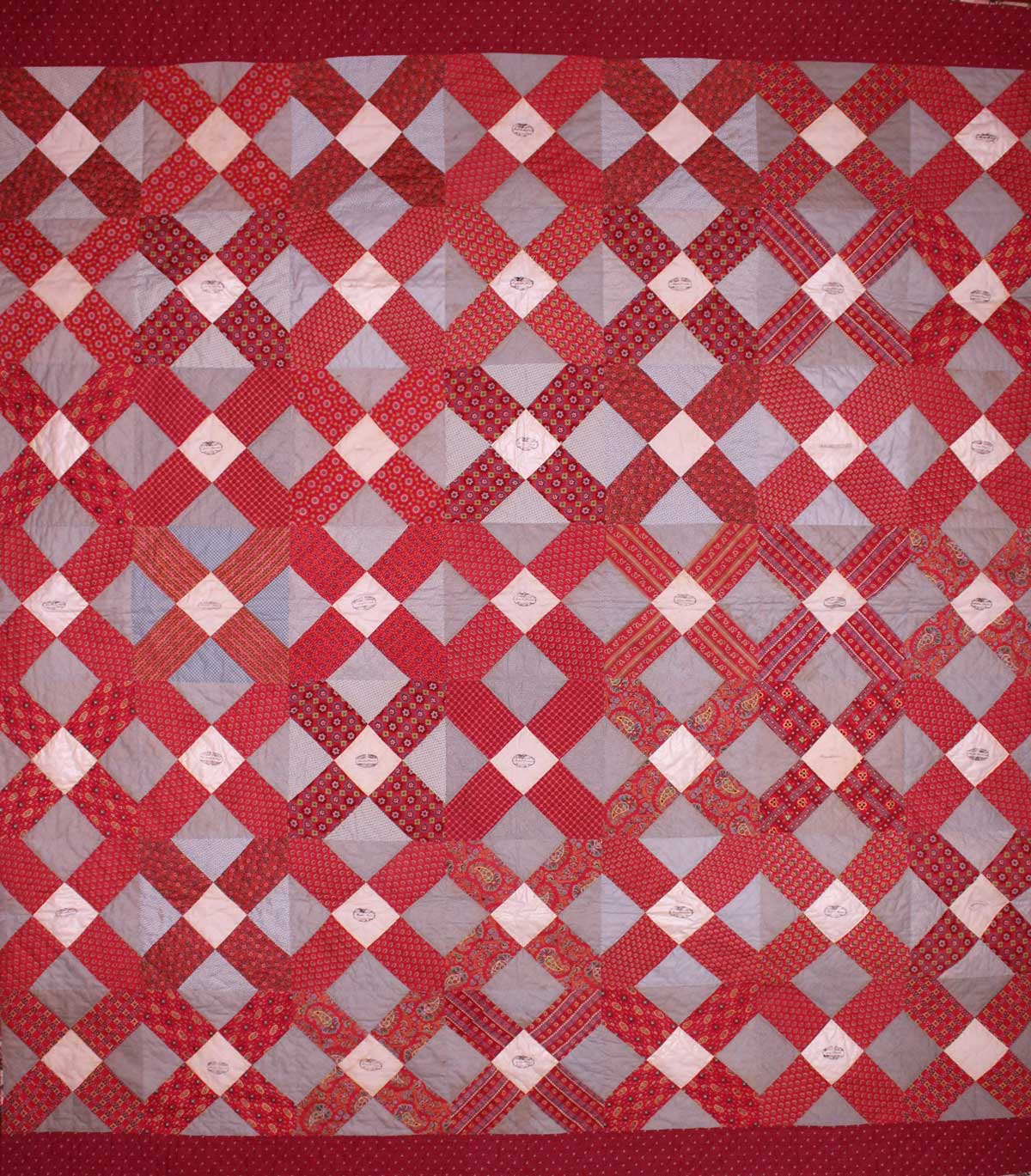
A Van Sant Family signature, quilt c.1850, Pennsylvania, from the Starley Collection. Appraisal training taught me that this quilt was a multi-generational project finished in stages and with a second quilt inside the first. (Image courtesy of the author)
Note: I travel nationally to conduct appraisal days at quilt shows and for quilt guilds. Please feel free to contact me to arrange an appraisal event.
Sandra Starley is nationally certified quilt appraiser, quilt historian, and avid antique quilt collector. She travels throughout the U.S. presenting talks on antique quilt history, fabric dating classes and trunk shows as well as quilting classes. Learn more at utahquiltappraiser.blogspot.com. Send your comments and quilt questions to SandraStarley@outlook.com
Ocean Waves quilts revisited
March 2024 Covering Quilts Ocean Waves quilts revisited by Sandra Starley Nature has long inspired quilters. As American quilting developed in Eastern seaboard settlements, it is not surprising that early quilt designs and pattern names often carried a nautical…
Journeys in quilt history: Political patchwork edition
February 2024 Covering Quilts Journeys in quilt history: Political patchwork edition by Sandra Starley Learning about the past can be fun! One of the things that I love most about collecting antique quilts, blocks, and fabrics are all the interesting tidbits of…
My Old Kentucky Home – Quilt adventures with the American Quilt Study Group
December 2023 Covering Quilts My Old Kentucky Home – Quilt adventures with the American Quilt Study Group by Sandra Starley I recently revisited “My Old Kentucky Home,” having lived there briefly as a youngster, for the Annual Seminar of the American Quilt…
The Rolling Stone Quilt Pattern
November 2023 Covering Quilts The Rolling Stone Quilt Pattern by Sandra Starley As I noted in last month’s column, the Rolling Stone block is a classic early pattern that has been popular for more than 170 years. Part of its appeal is the simple, aka easy piecing:…
Rolling Stone Revisited
October 2023 Covering Quilts Rolling Stone Revisited by Sandra Starley Rolling Stone is a classic early quilt pattern that has been gaining popularity for more than 170 years. The block can be constructed in two separate ways: as an even or uneven nine patch. Both…
French Star or American Star revisited
September 2023 Covering Quilts French Star or American Star revisited by Sandra Starley One of my all-time favorite antique quilt patterns is the French Star. I love sharing information about the block and hope to uncover more antique quilts featuring this design. I…