
The secret language of hobos
Oct. 2026
Everything Old
The secret language of hobos
by Corbin Crable
No matter what industry you’ve worked in, you’ve probably communicated with your co-workers using terminology that the outside public wouldn’t understand. For those who don’t have traditional jobs – or even a permanent home, for that matter – certain words and symbols can take on their own meaning, too.
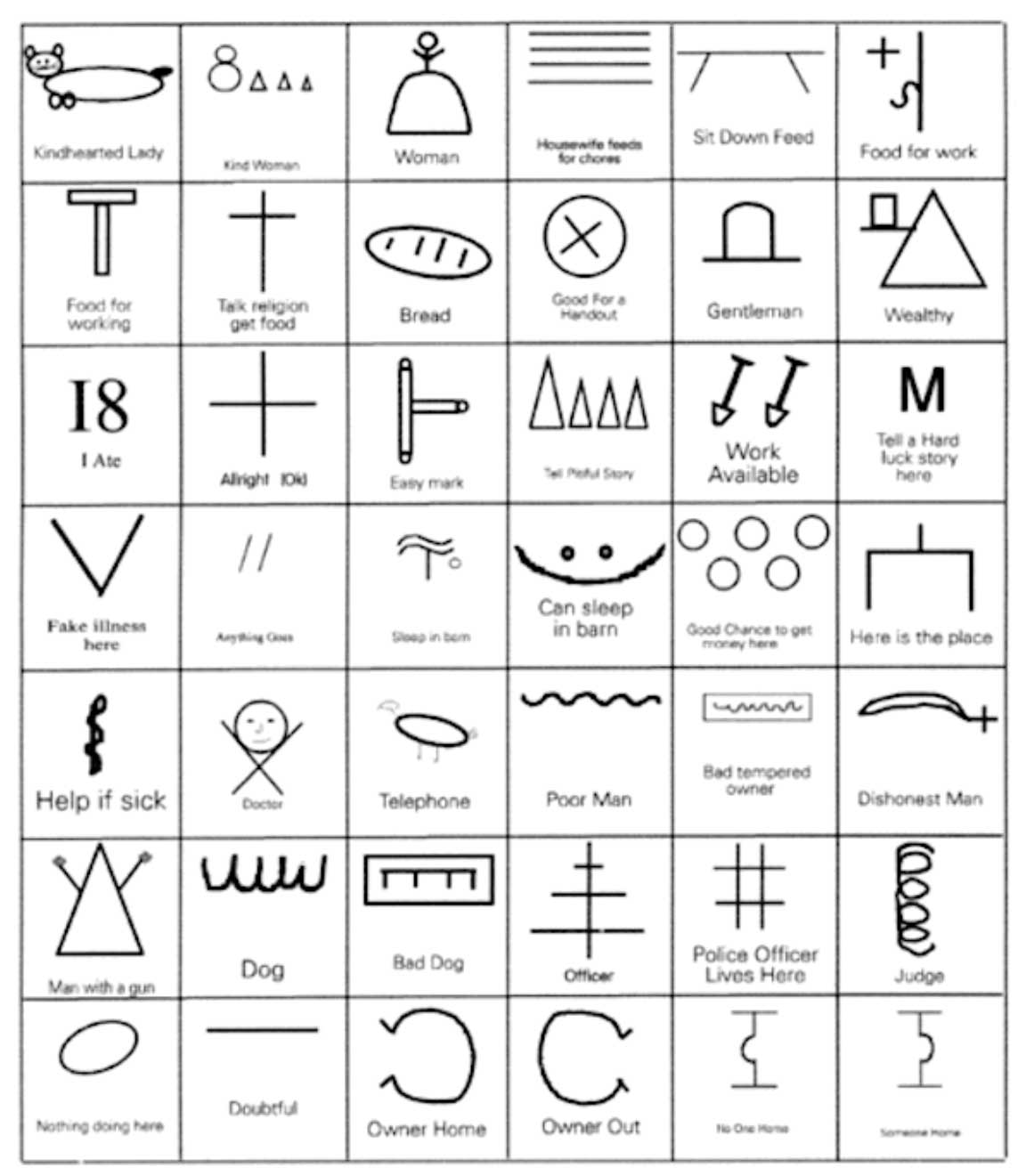
In this issue of Discover Vintage America, we’ll hit the dusty trail – or, in most cases, the old train tracks – and learn about the life of the hobo, a figure often portrayed but also generally misunderstood in the zeitgeist of American pop culture. Though we often view them with mistrust and derision, hobos, through a language of their own, can move throughout their own collective with ease, learning which people and places will be safe and hospitable for them on their journey.
We don’t know how the word ‘hobo’ itself originated. Some people believe its beginnings can be traced to the Civil War, and that it is a shortened reference to soldiers who are “homeward bound.” Others still think it came from the word ‘hoosier,’ meaning someone who is a frontiersman, someone who is rustic.
We do know, however, that the word ‘hobo’ began to be commonly used in the late 19th century, a few decades after the construction of the first railroad system in the U.S.
In the following years, these men, traversing the country’s rails searching for work, developed their own slang terms and symbols with which to communicate with one another (you’ll learn more about the symbols in this issue as well). Take a look at some of the lingo:
- Bazoo – Mouth. A term of derision. “Shut your bazoo!”
- Cannon ball – A fast train. “The Wabash Cannon Ball” is the mythical hobo train that travels everywhere (share that fact at the next football game, fellow K-Staters!)
- Dead soldier – An empty whiskey bottle lying beside the road
- Exhibition meal – A handout eaten on the doorstep. The madam wants the neighbors to witness her generosity.
- Knowledge box – Country school house where hobos sometimes sleep
- Mission stiff – Man who gets “saved” for food and a flop, or a place to stay
- Razor back – Circus roustabout. Also an Arkansas hog
- Remittance man – Hobo paid by his family to stay away from home
- Scrape the pavement – To get a shave
- Son of Adam – Hobo willing to do a chore for a handout
- Tin roof – A free drink. So-called because it is “on the house”
Fascinating, isn’t it? The next time you encounter a Son of Adam, be sure to supply him with an exhibition meal or a tin roof, and wish him well on the cannon ball when he departs.
On a separate and more solemn note, in this issue, we bid farewell to our longtime advertising director Al Hedrick, who died in late August. The staff of Discover Vintage America will miss Al’s knowledge, professionalism, dedication to his work, and the business relationships he built and maintained for our publication over the years. We offer our heartfelt condolences to Al’s family and friends for their loss. You can read Al’s obituary in this issue. For the time being, if you wish to submit an inquiry about advertising in Discover Vintage America, please e-mail editor@discovervintage.com or publisher@discovervintage.com.

Many differences exist between ‘Oz’ book and classic film
Sept. 2026 Everything Old Many differences exist between ‘Oz’ book and classic film by Corbin Crable As many of you may recall, watching “The Wizard of Oz” on cable television used to be an annual event – your family would get cozy in the living room, grab a bowl of…

Cutting the mystery (meat) out of school lunch programs
Photo by AI chatgpt Aug. 2026 Everything Old Cutting the mystery (meat) out of school lunch programs by Corbin Crable It’s about time to hang up the swimsuit and draft your list of back-to-school supplies. If you were like other kids headed back to the classroom, that…

America’s 100th anniversary put country’s progress on display
US Flag with 37 stars. In use 4 July 1867–3 July 1877. Created by jacobolus using Adobe Illustrator, and released into the public domain. July 2026 Everything Old America’s 100th anniversary put country’s progress on display by Corbin Crable If you were around in…
An ode to the Mother Road
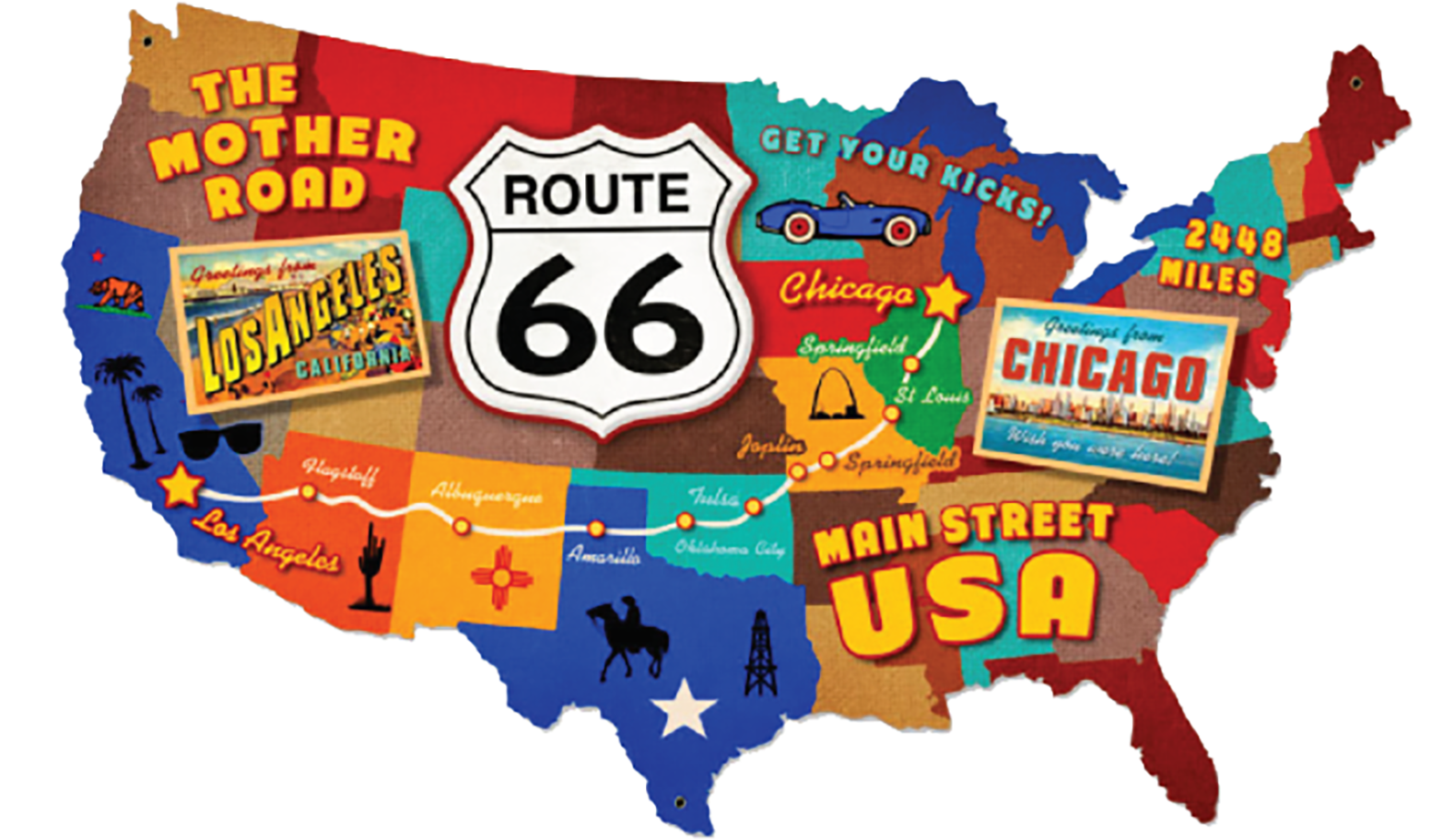
Photo by Nick Fewings on Unsplash March 2026 Everything Old An ode to the Mother Road by Corbin Crable If you ever plan to motor westTravel my way, take the highway that’s the bestGet your kicks on Route 66 It winds from Chicago to L.A.More than two thousand miles all…

Don’t lose your marbles: American games at the turn of the century
Photo by Nick Fewings on Unsplash March 2026 Everything Old Don’t lose your marbles: American games at the turn of the century by Corbin Crable Get your favorite cat’s eye polished, because in this issue of Discover Vintage America, we’ll be doing a deep dive into the…

A celebration of craftsmanship
Photo by Viktor Forgacs – click ↓↓ on Unsplash March 2026 Everything Old A celebration of craftsmanship by Corbin Crable It seems like there’s a day and a month designated to just about every cause, awareness, and activity out there. This month, we honor the handmade…