
The secret language of hobos
Oct. 2026
Everything Old
The secret language of hobos
by Corbin Crable
No matter what industry you’ve worked in, you’ve probably communicated with your co-workers using terminology that the outside public wouldn’t understand. For those who don’t have traditional jobs – or even a permanent home, for that matter – certain words and symbols can take on their own meaning, too.
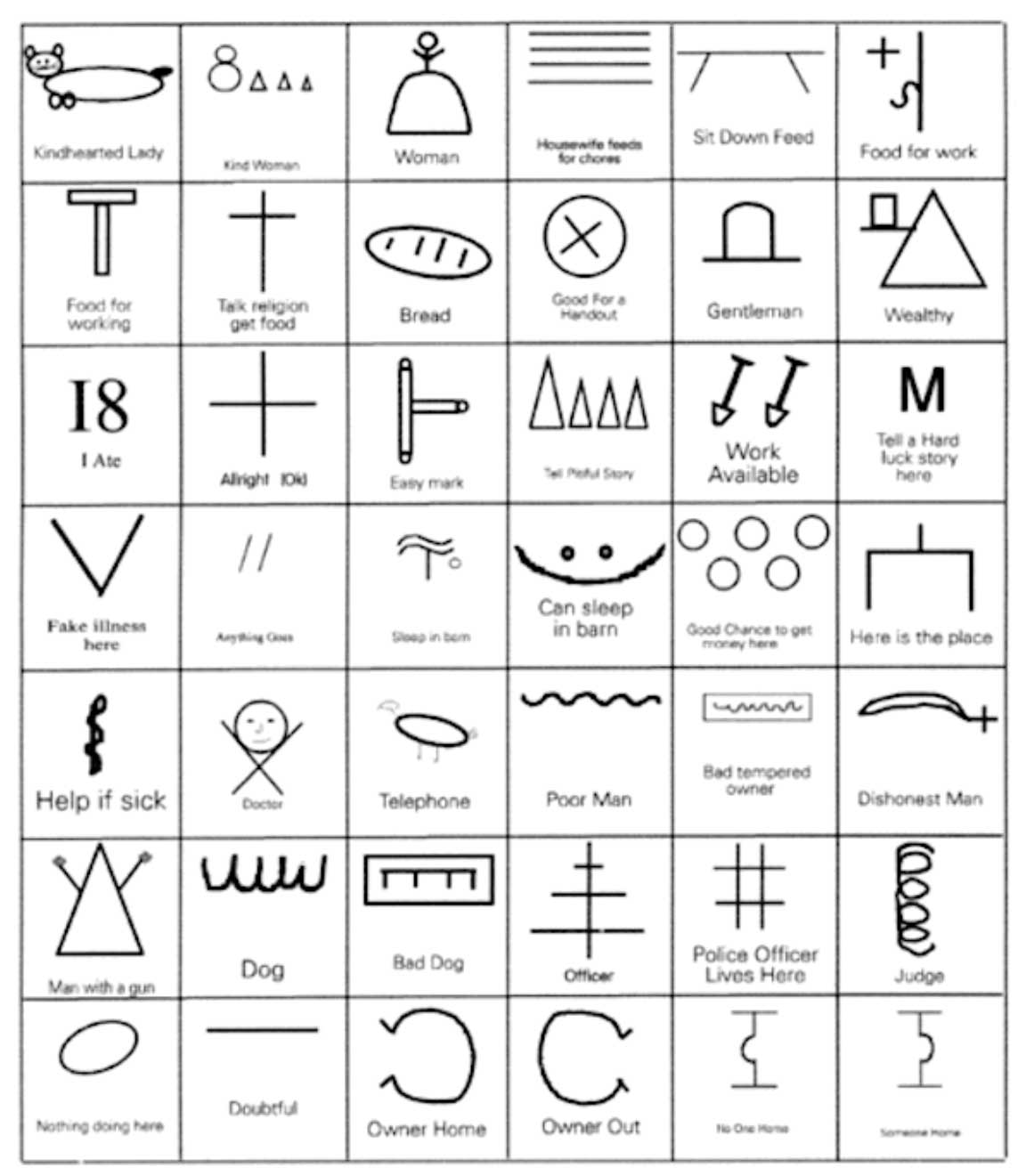
In this issue of Discover Vintage America, we’ll hit the dusty trail – or, in most cases, the old train tracks – and learn about the life of the hobo, a figure often portrayed but also generally misunderstood in the zeitgeist of American pop culture. Though we often view them with mistrust and derision, hobos, through a language of their own, can move throughout their own collective with ease, learning which people and places will be safe and hospitable for them on their journey.
We don’t know how the word ‘hobo’ itself originated. Some people believe its beginnings can be traced to the Civil War, and that it is a shortened reference to soldiers who are “homeward bound.” Others still think it came from the word ‘hoosier,’ meaning someone who is a frontiersman, someone who is rustic.
We do know, however, that the word ‘hobo’ began to be commonly used in the late 19th century, a few decades after the construction of the first railroad system in the U.S.
In the following years, these men, traversing the country’s rails searching for work, developed their own slang terms and symbols with which to communicate with one another (you’ll learn more about the symbols in this issue as well). Take a look at some of the lingo:
- Bazoo – Mouth. A term of derision. “Shut your bazoo!”
- Cannon ball – A fast train. “The Wabash Cannon Ball” is the mythical hobo train that travels everywhere (share that fact at the next football game, fellow K-Staters!)
- Dead soldier – An empty whiskey bottle lying beside the road
- Exhibition meal – A handout eaten on the doorstep. The madam wants the neighbors to witness her generosity.
- Knowledge box – Country school house where hobos sometimes sleep
- Mission stiff – Man who gets “saved” for food and a flop, or a place to stay
- Razor back – Circus roustabout. Also an Arkansas hog
- Remittance man – Hobo paid by his family to stay away from home
- Scrape the pavement – To get a shave
- Son of Adam – Hobo willing to do a chore for a handout
- Tin roof – A free drink. So-called because it is “on the house”
Fascinating, isn’t it? The next time you encounter a Son of Adam, be sure to supply him with an exhibition meal or a tin roof, and wish him well on the cannon ball when he departs.
On a separate and more solemn note, in this issue, we bid farewell to our longtime advertising director Al Hedrick, who died in late August. The staff of Discover Vintage America will miss Al’s knowledge, professionalism, dedication to his work, and the business relationships he built and maintained for our publication over the years. We offer our heartfelt condolences to Al’s family and friends for their loss. You can read Al’s obituary in this issue. For the time being, if you wish to submit an inquiry about advertising in Discover Vintage America, please e-mail editor@discovervintage.com or publisher@discovervintage.com.
Midcentury study blamed comic books for society’s ills
Photo by Erik Mclean on Unsplash August 2025 Everything Old Midcentury study blamed comic books for society’s ills by Corbin Crable In this issue of Discover Vintage America, we examine the history and popularity of comic books, that highly entertaining form of…

Porchfests put a song on the lips of passersby
Photo by Brandon Hoogenboom on Unsplash July 2025 Everything Old Porchfests put a song on the lips of passersby by Corbin Crable When I was a young boy, my parents would always drive by an old farmhouse on the way out of town. Without fail, no matter the time of day,…

Kitchen items worth their weight in memories, moolah
Photo by Daria Rudyk on Unsplash June 2025 Everything Old Kitchen items worth their weight in memories, moolah by Corbin Crable Roll up your sleeves and don your aprons, because this month’s issue of Discover Vintage America is headed into the kitchen as we explore…
Jukebox songs that put a song in our hearts
Photo by The Retro Store on Unsplash & jukebox (Image courtesy of rock-ola.com) May 2025 Everything Old Jukebox songs that put a song in our hearts by Corbin Crable In this issue of Discover Vintage America, we place the jukebox under a figurative magnifying glass,…

What were we thinking? Bizarre dishes of yesteryear
Image created by adobe firefly April 2025 Everything Old What were we thinking? Bizarre dishes of yesteryear by Corbin Crable The star of the show in this month’s issue of Discover Vintage America is the aspic – that oft-consumed dish that seemed to be synonymous with…

Dressing the part for disco
(Image created by Adobe Firefly) March 2025 Everything Old Dressing the part for disco by Corbin Crable It’s 1977. You and your friends spent the afternoon going to the local cinema and watching the new film “Saturday Night Fever.” Now you’re inspired — you want to…